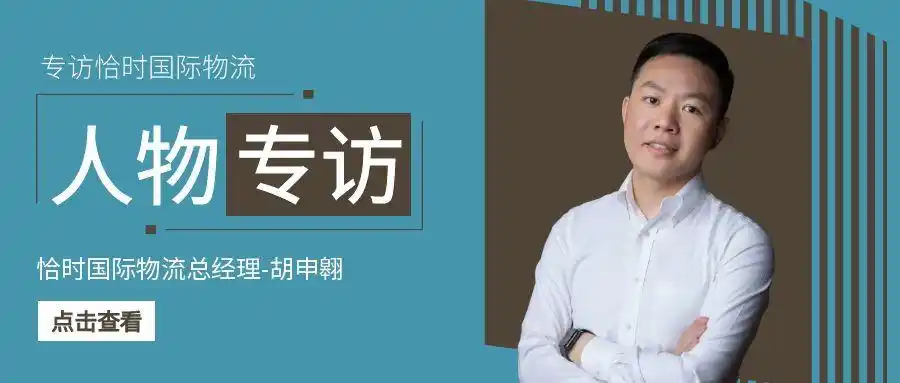
#Feeair.com Interview with James
**Feeari.com**: Mr. Hu, we are delighted to have invited you again. We have observed that despite the complex and volatile global trade environment, Qiaoshi International Logistics achieved a counter-trend explosive growth in 2025, which also attracted the attention of several investment institutions. First of all, Mr. Hu, what do you think is the most critical factor behind this explosive growth?
**James**: Thank you toFeeair.com for inviting me again. Speaking of this, I have had a profound insight recently—running a business is actually very similar to running. I basically go running at Xuhui Binjiang three times a week, where I can see the ships coming and going on the river, people doing morning exercises, and the cranes working at the dock in the distance. That state of maintaining a flow of concentration amid dynamics is particularly good for tempering a person's focus and resilience. In fact, running a business is the same; we need to maintain a steady pace amid changes.
When it comes to the key to growth, I believe the primary factor is the "flexible service capability" we have been continuously building. The greater the market volatility, the more customers need agile and customizable logistics solutions. At the same time, we have also been committed to forging the core value of the "Qiaoshi" brand—it is not just about being on time, but about providing a perfectly tailored service experience. This professional and reliable brand image has earned us the long-term trust of many customers.
**Feeari.com**: During the process of counter-trend growth, it is inevitable to encounter various unexpected situations. Could you share a specific case where you and your team responded to an unexpected crisis?
**James**: Indeed, international logistics deals with uncertainties every day. One incident that left a deep impression on me occurred in the third quarter of last year. A batch of precision instrument equipment belonging to one of our key customers was stuck at the Port of Hamburg in Germany due to a sudden strike. We received the news late on a weekend, and the situation not only meant facing high port detention fees but also risked delaying the installation schedule of the customer's production line.
We immediately activated our emergency response mechanism:
1. First, we formed an emergency team consisting of overseas agents, customs clearance personnel, and account managers within 15 minutes;
2. Second, we took multi-pronged actions—contacting nearby ports for transshipment, coordinating backup plans for air charter services, and at the same time, updating the customer on the progress every two hours;
3. Third, we made a quick decision. Based on the assessment of the situation at that time, we finally chose to use the China-Europe Railway Express for the domestic section of the transportation relay. This solution only took half a day longer than the original plan but saved at least ten days compared to waiting for the strike to end at the port.
What makes me particularly proud about this incident is not just that we solved the problem, but the performance of the entire team: some young colleagues took the initiative to connect with European agents overnight, and some senior employees leveraged the railway resources they had accumulated over the years. For us, the ability to respond to unexpected situations is the true touchstone of a brand. It tests not only the emergency mechanism but also whether the team truly prioritizes the customer's needs.
**Feeari.com**: This truly demonstrates Qiaoshi's professionalism and sense of responsibility. In your opinion, what is the most important role of a leader in such moments?
**James**: From my experience, a leader must first stay calm so that the team dares to charge forward. At such times, I don't need to rush to the front line to handle specific operations, but I must do three things well: first, provide direction by quickly confirming the principle that "ensuring timeliness takes priority over cost control"; second, provide support by mobilizing all possible internal and external resources; third, take responsibility, letting the team know that as long as the decision is based on sound reasoning and evidence, even if the result is not entirely satisfactory, I will take the responsibility. It's like when you hit a bottleneck while running—only by adjusting your breathing and maintaining your pace can you lead your body to break through the bottleneck.
**Feeari.com**: What does the favor of the capital market mean to Qiaoshi? And why did Qiaoshi eventually choose to reject the involvement of capital?
**James**: Of course, capital is concerned about the sustainable growth of a company, not just the growth rate of its scale. However, we believe that Qiaoshi is not yet at the optimal time to rely on external capital. At this stage, we are more focused on consolidating and cultivating our internal talent echelon. It can be said that Qiaoshi does not lack a clear business model or customer demand; what is truly scarce is "logistics consultant"-type talents who understand the industry, possess customer-centric thinking, and are capable of tackling tough challenges. This is our top priority at present.
Just like running, you can't win just by starting fast; the key lies in mastering the rhythm and building up stamina. We will never sacrifice service quality for the sake of scale expansion—this is the bottom line that Qiaoshi adheres to. Brand building is a marathon that requires long-term investment and patience. We hope to first consolidate our internal capabilities so that the brand value can naturally manifest itself.
**Feeari.com**: Then, in terms of team building, what specific measures has Qiaoshi taken? How do you systematically cultivate such "logistics consultant"-type talents?
**James**: We launched the "Navigator Program" last year, which outlines a clear growth path for employees at different stages:
- First, for new employees, we implement a "practical mentoring system". Each new consultant is assigned a senior coach, and in the first three months, the focus is on guidance rather than assessment;
- Second, for core employees, we offer "cross-chain integration courses", requiring those with a maritime shipping background to learn about air freight and those with an air freight background to understand maritime shipping, thereby completely breaking down the skill barriers in traditional logistics;
- Third, for managers, they must personally lead teams to tackle "customer pain point resolution projects". For example, last year, we successfully solved the problem of overseas return reverse logistics for a new energy battery enterprise.
The current industry is not short of people who can book shipping space; what is lacking is talents who can deeply understand the customer's business and have a holistic supply chain mindset. We also actively promote diversified communication with customers—often, the people who truly understand logistics pain points are on the customer's side. In this process, every team member is a spokesperson for the Qiaoshi brand, and their professional competence and service awareness directly shape the customer's perception of our brand.
**Feeari.com**: Since the business model has been validated, will Qiaoshi expand into other business areas in the future? Are there any plans for new directions?
**James**: We will still adhere to our main focus of "providing multi-dimensional services for Chinese-manufactured goods going global", but we are also making efforts in two new directions at present:
- First, we are promoting professional operations in segmented industries. We plan to establish multiple industry business divisions around Shanghai, and the teams must deeply understand the customers' products, technologies, and sales models;
- Second, we are launching "supply chain integration" services, joining hands with ecological partners to provide one-stop solutions for enterprises going global, integrating logistics, customs clearance, tax refund, and capital flow services.
In the final analysis, the competition among logistics enterprises in the future will no longer be just at the price level, but a competition in the overall efficiency and resilience of the supply chain. In this process, the brand will become a key symbol for distinguishing value, and Qiaoshi aims to become the professional and reliable first-choice partner in the minds of customers.
**Feeari.com**: Finally, during Qiaoshi's journey of counter-trend growth, what is your biggest personal insight? Has your habit of running also brought any inspiration to your business management?
**James**: Indeed, running has given me a lot of inspiration. The more we are in a complex environment, the more we need to return to the essence. Just like what I see when I run at Xuhui Binjiang—the Huangpu River may have tides and waves, but it always flows eastward. Running a business is the same; the essence of logistics is "service", and the essence of service is "solving problems for people".
Over the past two years, I have often said to my team: "We should not be just movers of orders, but supply chain consultants for our customers." Qiaoshi's growth is not because we are so extraordinary, but because we insist on thinking one step ahead and going one step further for our customers, and ultimately won their trust. The accumulation of this trust is precisely the most solid foundation for brand building. There are indeed similarities between sports and business management—both require perseverance, a sense of rhythm, and the courage to adapt to changes. Sometimes, when I'm running by the river, an inspiration suddenly strikes and everything becomes clear; that kind of experience is really enjoyable.
**Feeari.com**: Thank you, Mr. Hu, for sharing so many valuable insights again.
**James**: Thank you toFeeair.com as well. Qiaoshi is still growing, and we look forward to sharing more achievements with everyone next year!